Title: Enhancing Healthcare Security with Zero Trust and Single Sign-On (SSO)
In today’s digitally connected healthcare environment, the need for secure and seamless access to electronic health records (EHRs), lab systems, and telehealth platforms is greater than ever. As healthcare organizations adopt more cloud-based applications and remote work becomes common, traditional perimeter-based security models no longer suffice. This is where Single Sign-On (SSO) combined with
plays a crucial role in modernizing and securing access to healthcare systems.
https://www.authx.com/single-sign-on/ is a user authentication process that allows a user to access multiple applications with one set of login credentials. Instead of requiring healthcare professionals to remember different usernames and passwords for each system—such as the EHR, radiology platform, or billing software—SSO enables access through a single, secure login. This not only improves user convenience but also reduces password fatigue and IT support costs.
Zero Trust is a security framework based on the principle of "never trust, always verify." In contrast to legacy models that automatically trust users inside the network, Zero Trust assumes that threats could exist both inside and outside the network perimeter. Every access request must be verified, authenticated, and authorized based on multiple factors—such as user identity, device health, location, and time of access.
| https://www.authx.com/blog/sso-for-healthcare/ |
For the healthcare sector, which handles sensitive Protected Health Information (PHI), adopting a Zero Trust model is not just a best practice—it’s essential for HIPAA compliance and protecting against cyber threats like ransomware and phishing attacks.
Integrating Zero Trust principles with SSO enhances the overall security posture without sacrificing usability. Here’s how: https://www.authx.com/use-cases/zero-trust-security/
Context-Aware Authentication: Before granting access, the system verifies not only the user’s identity but also contextual signals—such as device status, IP address, and login behavior—to detect anomalies.
Multi-Factor Authentication (MFA): Zero Trust-based SSO enforces MFA at login, ensuring that even if credentials are compromised, attackers cannot gain access.
Access Control and Least Privilege: Role-Based Access Control (RBAC) ensures that healthcare staff access only the data necessary for their role—nothing more.
Token-Based Authorization: Instead of long-lived sessions, Zero Trust SSO systems use short-lived tokens, which minimize the window of opportunity for misuse.
Continuous Monitoring: Authentication doesn’t end at login. Sessions are continuously evaluated, and suspicious activity can trigger re-authentication or session termination.
Improved User Experience: Clinicians and staff spend less time logging in and switching between applications, allowing more focus on patient care.
Stronger Security: Continuous verification and MFA reduce the risk of unauthorized access to PHI.
Regulatory Compliance: Helps meet HIPAA and HITECH security requirements through strong access controls and audit trails.
Reduced IT Overhead: Centralized access management simplifies user provisioning and reduces password reset requests.
As healthcare continues to digitize, the combination of Single Sign-On and Zero Trust Authentication offers a scalable and secure way to manage access. This approach not only safeguards sensitive medical data but also supports operational efficiency and regulatory compliance. By implementing Zero Trust SSO, healthcare organizations can better protect their patients, their staff, and their reputation in an increasingly complex threat landscape.
Read morePublished on July 30, 2025


Title: Enhancing Healthcare Security with Zero Trust and Single Sign-On (SSO)
In today’s digitally connected healthcare environment, the need for secure and seamless access to electronic health records (EHRs), lab systems, and telehealth platforms is greater than ever. As healthcare organizations adopt more cloud-based applications and remote work becomes common, traditional perimeter-based security models no longer suffice. This is where Single Sign-On (SSO) combined with
plays a crucial role in modernizing and securing access to healthcare systems.
https://www.authx.com/single-sign-on/ is a user authentication process that allows a user to access multiple applications with one set of login credentials. Instead of requiring healthcare professionals to remember different usernames and passwords for each system—such as the EHR, radiology platform, or billing software—SSO enables access through a single, secure login. This not only improves user convenience but also reduces password fatigue and IT support costs.
Zero Trust is a security framework based on the principle of "never trust, always verify." In contrast to legacy models that automatically trust users inside the network, Zero Trust assumes that threats could exist both inside and outside the network perimeter. Every access request must be verified, authenticated, and authorized based on multiple factors—such as user identity, device health, location, and time of access.
| https://www.authx.com/blog/sso-for-healthcare/ |
For the healthcare sector, which handles sensitive Protected Health Information (PHI), adopting a Zero Trust model is not just a best practice—it’s essential for HIPAA compliance and protecting against cyber threats like ransomware and phishing attacks.
Integrating Zero Trust principles with SSO enhances the overall security posture without sacrificing usability. Here’s how: https://www.authx.com/use-cases/zero-trust-security/
Context-Aware Authentication: Before granting access, the system verifies not only the user’s identity but also contextual signals—such as device status, IP address, and login behavior—to detect anomalies.
Multi-Factor Authentication (MFA): Zero Trust-based SSO enforces MFA at login, ensuring that even if credentials are compromised, attackers cannot gain access.
Access Control and Least Privilege: Role-Based Access Control (RBAC) ensures that healthcare staff access only the data necessary for their role—nothing more.
Token-Based Authorization: Instead of long-lived sessions, Zero Trust SSO systems use short-lived tokens, which minimize the window of opportunity for misuse.
Continuous Monitoring: Authentication doesn’t end at login. Sessions are continuously evaluated, and suspicious activity can trigger re-authentication or session termination.
Improved User Experience: Clinicians and staff spend less time logging in and switching between applications, allowing more focus on patient care.
Stronger Security: Continuous verification and MFA reduce the risk of unauthorized access to PHI.
Regulatory Compliance: Helps meet HIPAA and HITECH security requirements through strong access controls and audit trails.
Reduced IT Overhead: Centralized access management simplifies user provisioning and reduces password reset requests.
As healthcare continues to digitize, the combination of Single Sign-On and Zero Trust Authentication offers a scalable and secure way to manage access. This approach not only safeguards sensitive medical data but also supports operational efficiency and regulatory compliance. By implementing Zero Trust SSO, healthcare organizations can better protect their patients, their staff, and their reputation in an increasingly complex threat landscape.
 Jesse Cool Electrical And Solar
Monday 08:09
Jesse Cool Electrical And Solar
Monday 08:09
 CameraMatics
1 week
CameraMatics
1 week

 Pro
Air Office Desks
2 weeks
Pro
Air Office Desks
2 weeks

 Riya Rajjput
2 weeks
Riya Rajjput
2 weeks
 pelorus
2 weeks
pelorus
2 weeks

 Pro
Matebiz Pvt. Ltd.
3 weeks
Pro
Matebiz Pvt. Ltd.
3 weeks

 Simon K
4 weeks
Simon K
4 weeks

 Pro
Nevina Infotech Pvt.Ltd.
1 month
Pro
Nevina Infotech Pvt.Ltd.
1 month
 WhatIsGoogleFlow
1 month
WhatIsGoogleFlow
1 month
 matthevhenry
1 month
matthevhenry
1 month
 Vegavid Technology
1 month
Vegavid Technology
1 month
 Pocket Friendly
1 month
Pocket Friendly
1 month
 markus zusak
1 month
markus zusak
1 month
 QuickBooks Integrations
1 month
QuickBooks Integrations
1 month
 outbounding
2 months
outbounding
2 months

 Vivek Chaudhary
2 months
Vivek Chaudhary
2 months

 Pro
Daifuku Intralogistics India
3 months
Pro
Daifuku Intralogistics India
3 months
 Pro
Daifuku Intralogistics India
3 months
Pro
Daifuku Intralogistics India
3 months
 Pro
Daifuku Intralogistics India
3 months
Pro
Daifuku Intralogistics India
3 months
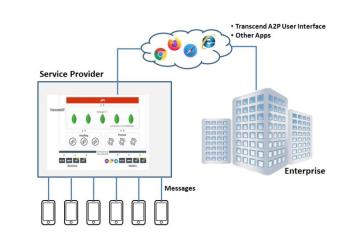
 Transcend Connect
3 months
Transcend Connect
3 months
 Pro
Digipay guru
3 months
Pro
Digipay guru
3 months
 Jane Aurel
4 months
Jane Aurel
4 months

 Taskroup
4 months
Taskroup
4 months
 Taskroup
4 months
Taskroup
4 months
 Vivekananda IAS Academy
9 months
Vivekananda IAS Academy
9 months
 jay
7 months
IgrowSoft Solutions
6 months
jay
7 months
IgrowSoft Solutions
6 months
 Pro
Matebiz Pvt. Ltd.
3 weeks
IgrowSoft Solutions
5 months
Pro
Matebiz Pvt. Ltd.
3 weeks
IgrowSoft Solutions
5 months
 IgrowSoft Solutions
6 months
IgrowSoft Solutions
6 months
 IgrowSoft Solutions
6 months
IgrowSoft Solutions
6 months